What a 200-year-old wishing doll from Gunma can teach the world about setting goals — and never giving up
Few Japanese objects are as instantly recognizable as the Daruma doll (だるま). Round, red, and staring back with two wide blank eyes, it sits on desks, altars, and shop counters across Japan.
But this papier-mâché figure is far more than a souvenir. It is a talisman, a goal-tracking tool, and a piece of living craftsmanship that has been hand-painted the same way for two centuries.
What Is a Daruma Doll?
A Daruma doll is a hollow, egg-shaped figure modeled on Bodhidharma (達磨大師, Daruma Daishi), the Indian monk credited with founding Zen Buddhism (禅) in China. Legend says he meditated facing a wall for nine years, and lost the use of his limbs in the process — which is why the doll has no arms or legs.
Its weighted, rounded base makes it a roly-poly toy: push it over, and it always rolls back upright. This physical quirk gave rise to the doll's real meaning in Japan, tied to the proverb nanakorobi yaoki (七転び八起き), "fall down seven times, get up eight."
Millions of Japanese households buy a Daruma at the start of the year, not as a decoration, but as a private commitment device for a goal they intend to reach.
Where Does the Daruma Doll Come From?
The doll's craft heartland is Takasaki (高崎), a city in Gunma Prefecture that still produces the vast majority of Japan's papier-mâché daruma — historically close to 90% of national output. Local records date organized daruma sales at Takasaki's town market back to at least 1829.
According to Takasaki's city archives, the craft was formalized around 200 years ago by Yamagata Tomogorō, a doll-maker's apprentice from the former village of Toyooka who returned home and began carving the wooden molds still used today.
Local silk farmers adopted the doll as a guardian charm, drawing a parallel between the silkworm "rising" (起きる, okiru) from its molted shell and the Daruma that always gets back up. Gunma's dry winter wind, the karakkaze, also happens to be ideal for drying the pasted paper and painted lacquer — a climate quirk that helped cement Takasaki as Japan's daruma capital.
The doll's thick eyebrows are shaped like a crane, and its mustache like a turtle's tail — a nod to the old saying that "the crane lives 1,000 years, the turtle 10,000," making the Daruma a wish for longevity as well as success.
Why Does a Daruma Doll Have No Eyes When You Buy It?
Every new Daruma is sold with blank white eyes. Painting in the first pupil is called kaigen (開眼), literally "eye-opening," and it is the moment the doll's power is considered activated.
This is not a cosmetic step — it is the ritual that turns a decorative object into a personal pledge. The owner states a specific goal out loud while painting the eye, turning the doll into a visible, daily reminder of that commitment.
Which Eye Do You Paint First?
Following the tradition kept by Takasaki's own daruma makers, the left eye — the one on the doll's own left, which appears on your right as you face it — is painted first, at the moment you set your goal.
The second eye is painted only once the goal is achieved, as a gesture of gratitude. If the wish never comes true, many people still paint the second eye at year's end out of respect, before retiring the doll and starting fresh with a new one.
What Do the Colors of a Daruma Doll Mean?
While red remains the traditional color — believed to ward off illness and misfortune — Takasaki's craftsmen now hand-paint Daruma in a full range of colors, each tied to a different intention:
- Red — Luck & Good Fortune
- White — Love & Harmony
- Black — Success in Business
- Gold — Wealth & Prosperity
- Yellow — Security & Protection
- Blue — Work & School Accomplishment
- Purple & Green — Health & Longevity
- Pink — Love
Fun fact: politicians running for office in Japan famously use giant Daruma dolls at their campaign headquarters, painting one eye on election night and the second only if they win.
What Do You Do With a Daruma Doll After Your Wish Comes True?
A completed Daruma is not simply thrown away. Many owners return it to a temple for daruma kuyō (だるま供養), a purification ceremony where old dolls are ritually burned, often during the Dontoyaki bonfire in mid-January — a respectful send-off before bringing a new Daruma home for the year ahead.
Some of the country's biggest Daruma markets (だるま市, daruma-ichi), including the one held at Takasaki's own Shōrinzan Darumaji (少林山達磨寺), draw hundreds of thousands of visitors each January for exactly this exchange of old wishes for new ones.
Bring an Authentic Takasaki Daruma Home
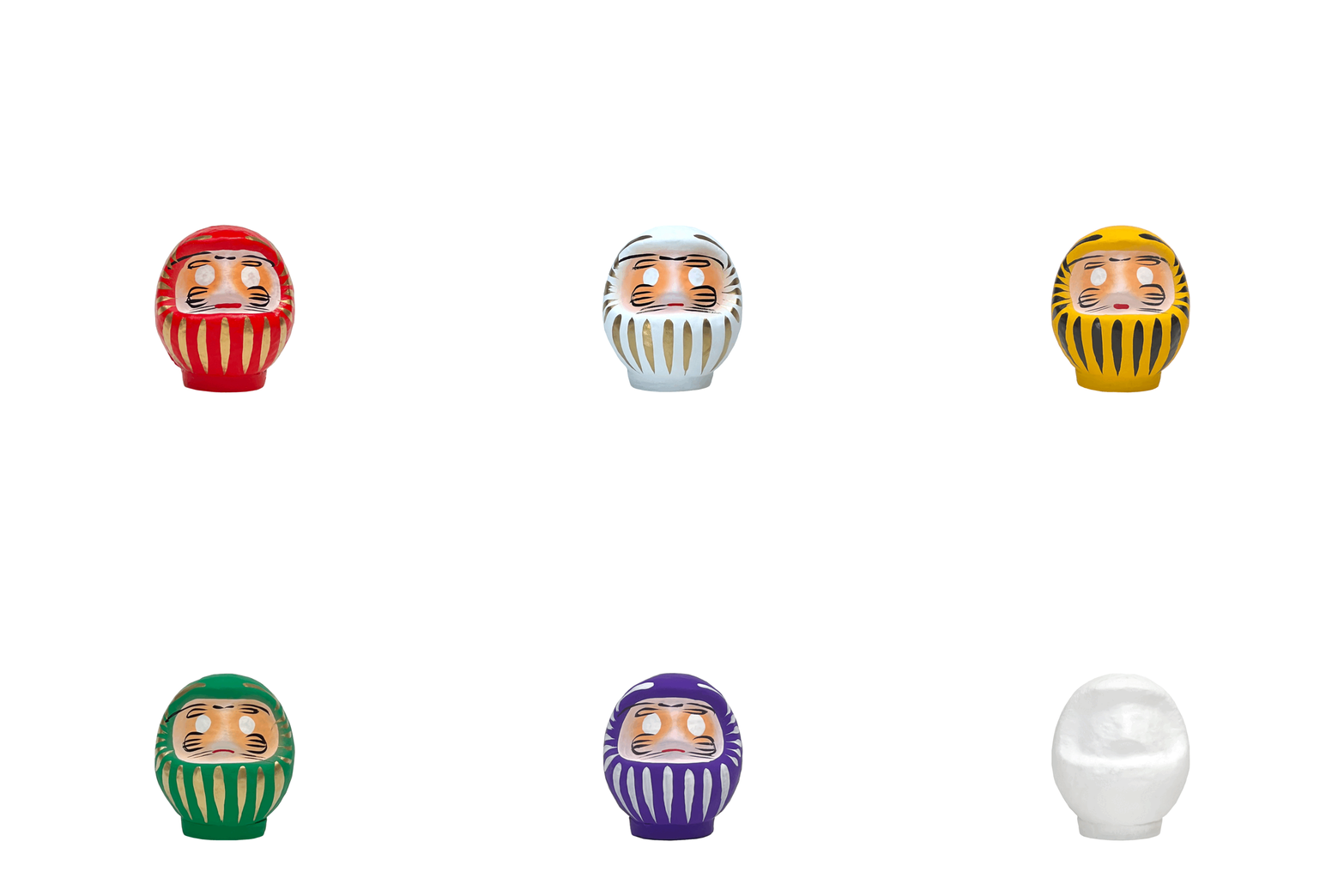
At Japan-Best.net, each Daruma doll is still hand-painted by a master craftsman in Gunma, following the same technique passed down since the 19th century. Available in nine colors and sizes, it comes ready for its first eye — and your first goal.
→ Shop the hand-painted Daruma Doll at Japan-Best.net
Whether displayed on a desk, given as a gift for a new job, or bought fresh for the New Year, the Daruma doll remains one of Japan's most enduring reminders that setbacks are only ever temporary — provided you keep getting back up.