
Fleur des Dieux Wakocha - Édition limitée
Fleur des Dieux Wakocha - Édition limitée
BOWS & ARROWS Store
17 Rue Notre Dame de Nazareth
Tue to Sat, from 12h30pm to 7h30pm
75003 Paris
France
- Infusé de fleurs sacrées d’Ogatama, la « fleur des dieux »
- Cultivé près du légendaire sanctuaire Amanoiwato à Miyazaki
- Arôme floral doux, sucré et épicé avec un goût calme et apaisant
- Un thé riche en histoires inspiré par la déesse du soleil Amaterasu
- Thé japonais « Kamairi » en édition super limitée et petite production : seulement deux par client au Japon et un par client à l'étranger
Le thé noir aux fleurs d'Ogatama - Tamayobi provient des montagnes de Miyazaki, près du sanctuaire sacré d'Amanoiwato Jinja Nishi Hongu à Kyushu. Un thé inspiré par la « Fleur des Dieux » – la fleur d'Ogatama. Ce thé noir, nommé « Tamayobi » (玉呼び, « appelant l'âme »), superpose délicatement le parfum doux et sacré des fleurs d'Ogatama sur un thé noir japonais soigneusement élaboré, créant une tasse à la fois réconfortante et subtilement mystique.
Wakocha signifie « thé noir japonais » qui est fabriqué à partir de la même plante de thé que le thé vert, mais les feuilles sont traitées différemment pour créer leurs saveurs distinctes. Pour faire du thé noir, on laisse les feuilles cueillies s'oxyder complètement (s'assombrir au contact de l'air) avant de les sécher, tandis que pour le thé vert, on arrête rapidement l'oxydation par la chaleur. Le thé Kamairi est un thé japonais rare obtenu en torréfiant les feuilles de thé fraîchement cueillies dans une marmite en fer, ce qui lui confère un arôme grillé et rafraîchissant, ainsi qu'une liqueur claire et dorée.
Ce thé noir japonais, lentement torréfié pendant plus de 20 heures, se caractérise par un arôme fruité et une douceur délicate, lui conférant une sensation en bouche moelleuse.
C'est une superbe combinaison qui renforce l'attrait des deux éléments tout en préservant le parfum de la fleur d'ogatama.
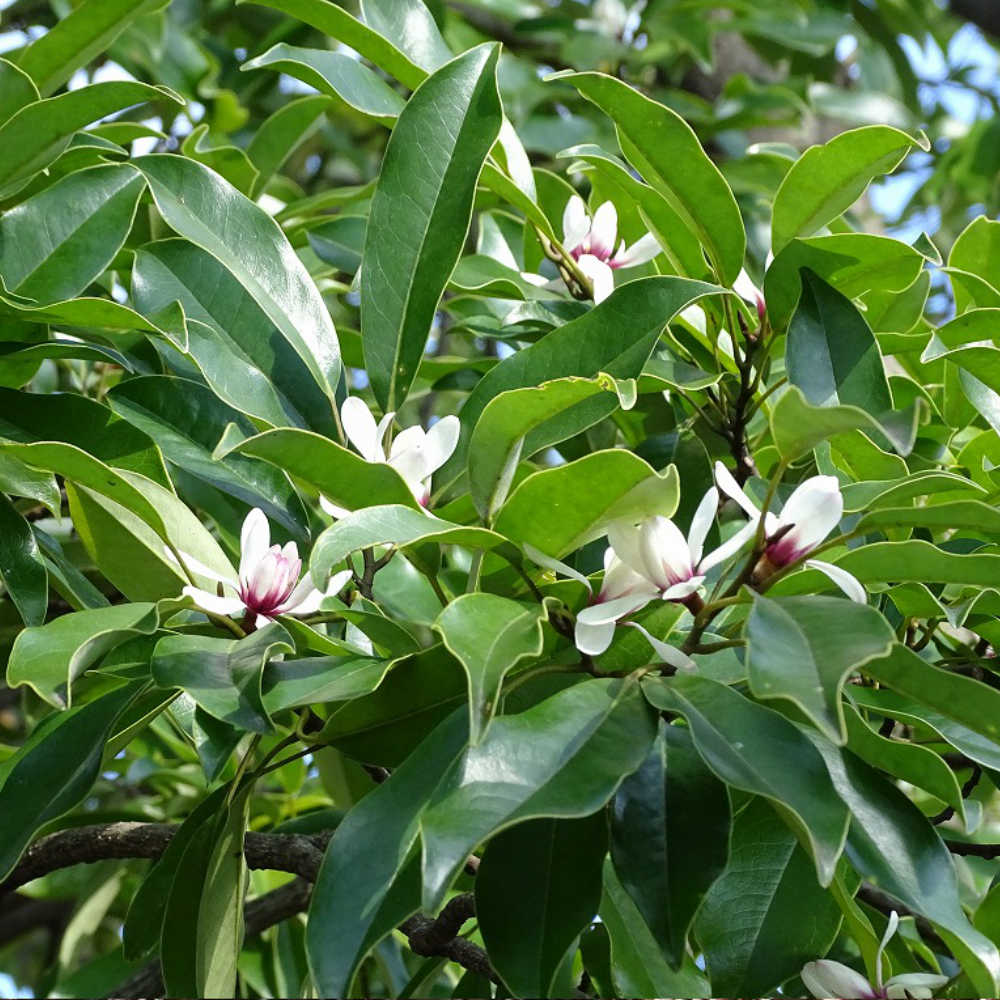
La fleur d'Ogatama a longtemps été associée au divin au Japon et est parfois plantée dans les sanctuaires comme un arbre qui invite et accueille les divinités. Ses fleurs ont une apparence blanc crème et un parfum doux, légèrement épicé, avec une nuance chaude et légèrement exotique, ce qui la rend plus profonde et plus ambrée que les fleurs d'agrumes. Ce caractère naturellement floral se mélange à la richesse du thé noir pour donner un goût rond et apaisant qui s'accorde merveilleusement avec les moments de calme, les douceurs ou l'heure du thé du soir.
La « fleur du dieu » et la terre de la déesse :
Dans la tradition japonaise, l'arbre Ogatama (おがたまの木) est lié à la croyance shintoïste en tant qu'arbre sacré utilisé pour « inviter les dieux », et ses branches étaient historiquement utilisées dans les rituels pour appeler les kami. Planter des Ogatama près des sanctuaires symbolise un lieu où la présence divine est accueillie, c'est pourquoi trouver cette fleur près d'une zone riche en sanctuaires à Miyazaki confère au thé une forte résonance spirituelle et culturelle. Le nom « Tamayobi » évoque l'idée d'appeler ou d'inviter doucement l'âme, reflétant à la fois le rôle rituel de l'arbre et le caractère apaisant et centrant du thé lui-même.
La déesse et la grotte – Amanoiwato
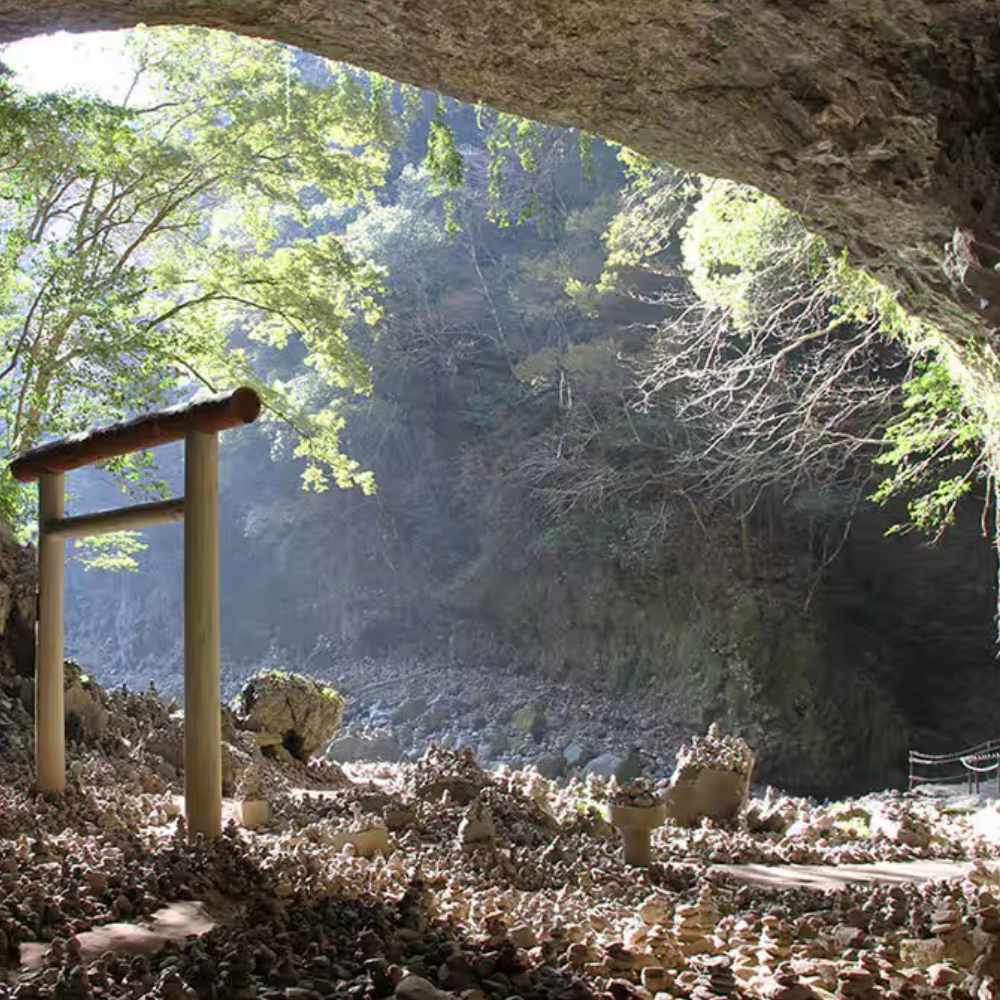
La ferme de thé se trouve près d'Amanoiwato Jinja Nishi Hongu, un sanctuaire dédié à la déesse solaire Amaterasu, l'une des divinités les plus importantes de la mythologie japonaise. Selon la légende, Amaterasu se cacha un jour dans une grotte rocheuse (Amanoiwato) après un conflit avec son frère Susanoo, plongeant le monde dans l'obscurité car sa lumière solaire avait disparu. Pour la faire sortir, les autres dieux se rassemblèrent devant la grotte, exécutèrent une danse et une célébration animées, et quand Amaterasu ouvrit la porte rocheuse par curiosité, ils la tirèrent dehors et restaurèrent la lumière dans le monde.
La région d'Amanoiwato est considérée comme le lieu même de ce mythe, et le sanctuaire voisin vénère la grotte rocheuse associée au retrait d'Amaterasu. Boire le thé noir aux fleurs d'Ogatama « Tamayobi » de ce paysage relie la douce et sacrée fleur d'Ogatama à l'histoire de la déesse cachée et au retour de la lumière – un thé qui donne l'impression d'une douce invitation à ce que la chaleur, la luminosité et le calme reviennent dans la vie quotidienne.
La ferme de thé est une ferme de thé kamairi située dans la ville de Gokase, préfecture de Miyazaki, à une altitude d'environ 600 mètres, presque exactement au centre de Kyushu. Au nord s'étend le majestueux mont Aso, tandis qu'à l'ouest vous pouvez voir la préfecture de Kumamoto et, au loin, Unzen de Nagasaki ; par temps clair, une vue imprenable sur le coucher de soleil a valu à la ville le surnom de « village du coucher de soleil ». Le thé Kamairi, contrairement au sencha standard, est fabriqué en torréfiant les feuilles de thé dans une marmite, ce qui lui confère un arôme rafraîchissant et une liqueur dorée claire souvent appelée « thé doré », et bien qu'il ait été autrefois courant dans les foyers et dans de nombreuses fermes, il ne représente plus qu'environ 1 % de la production de thé du Japon, ce qui en fait un style extrêmement rare.
10 grammes
Fabriqué dans la préfecture de Miyazaki