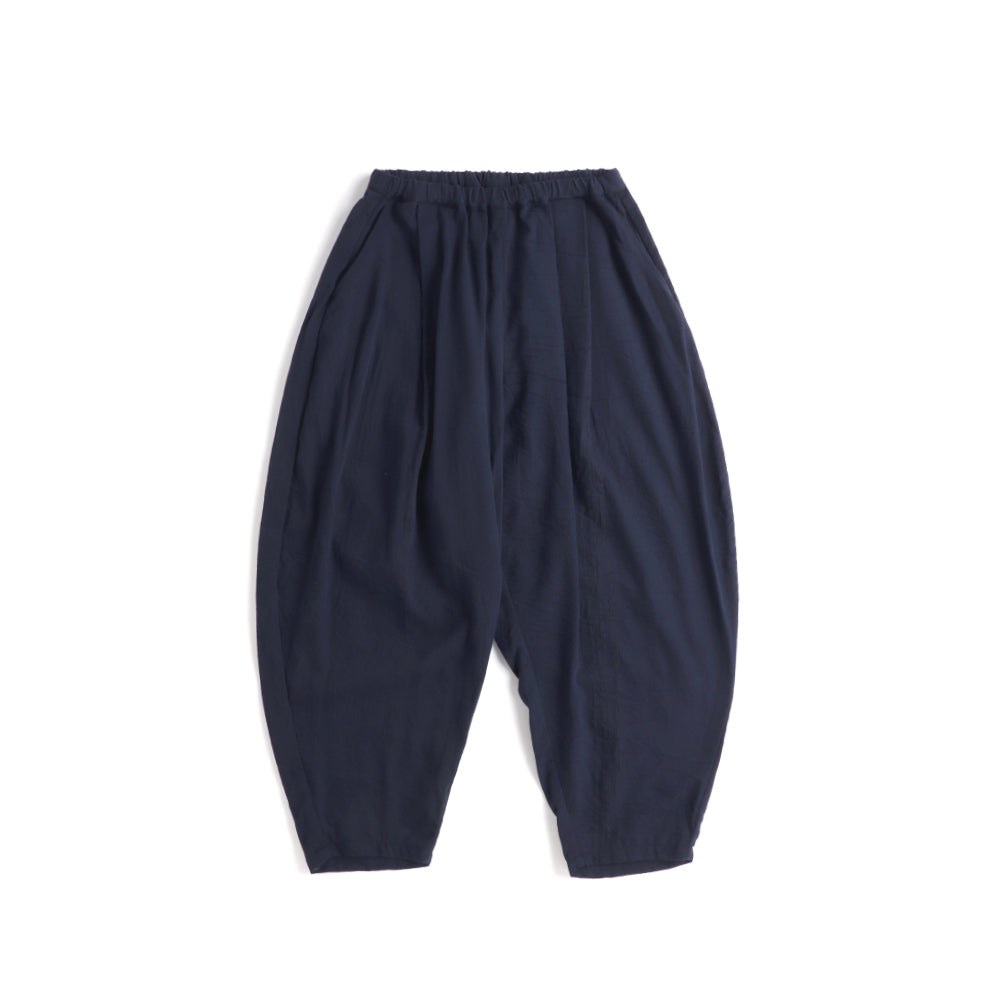
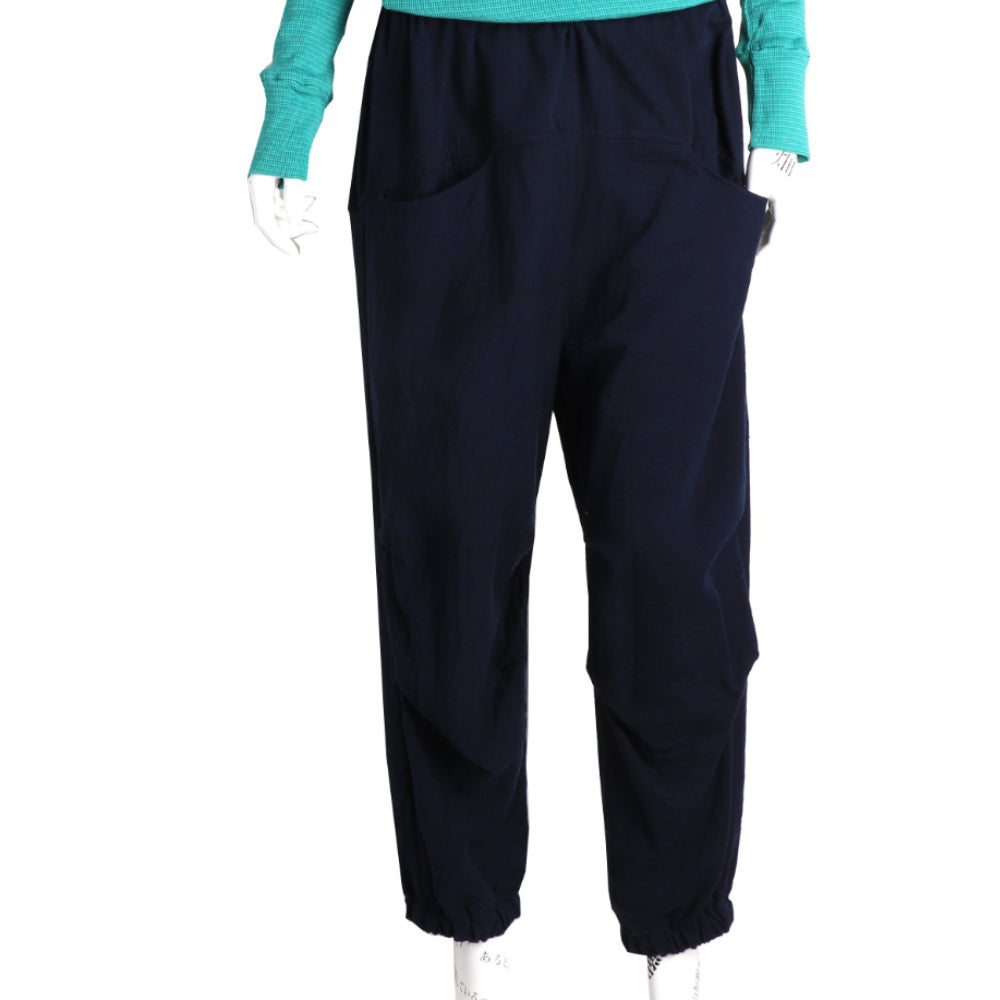
Tamaki Niime Pop-up 1.2026
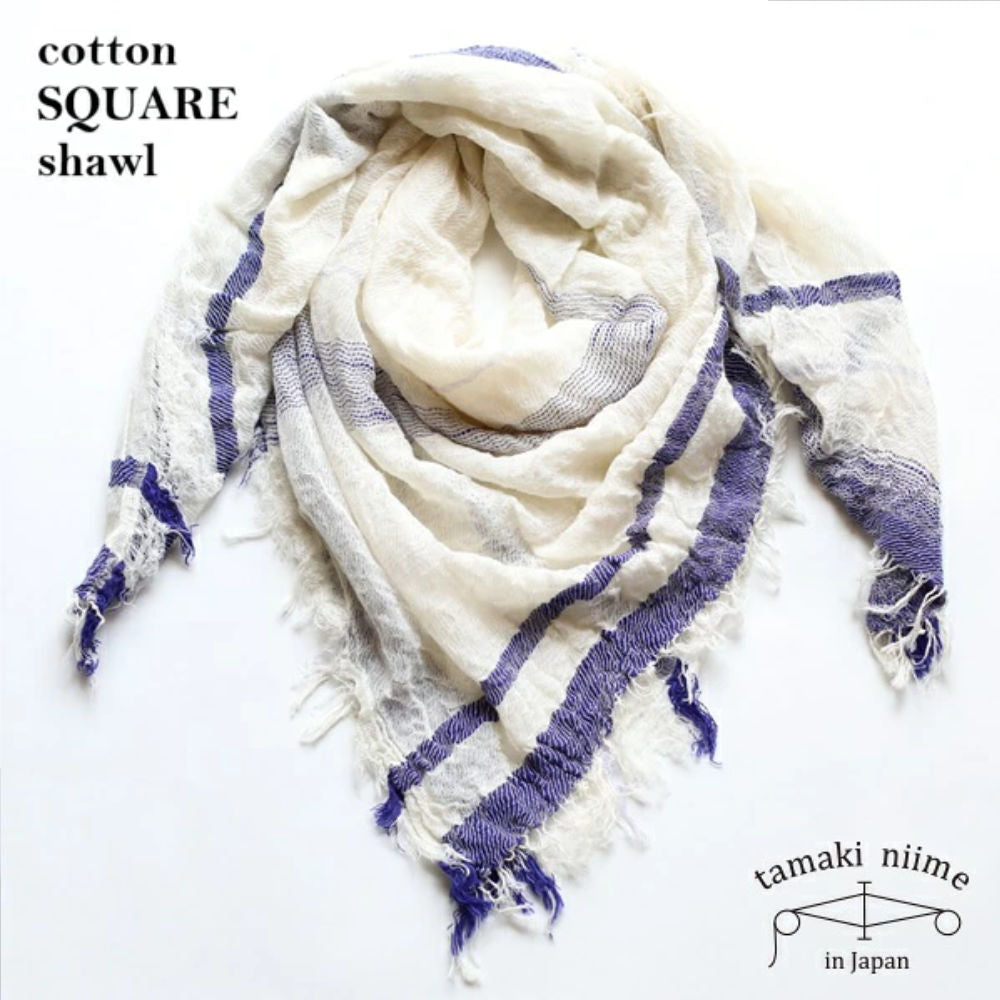
Typ:Roots Big Cotton 100 %
Menge:
Abholung von BOWS & ARROWS Store möglich
Gewöhnlich fertig in 24 Stunden
Tamaki Niime Pop-up 1.2026
Roots Big Cotton 100 %
BOWS & ARROWS Store
Abholung möglich, gewöhnlich fertig in 24 stunden
17 Rue Notre Dame de Nazareth
Tue to Sat, from 12h30pm to 7h30pm
75003 Paris
Frankreich
Beschreibung
Heritage & technique
- The fabric is Banshu-ori (播州織), a weaving technique that started in 1792 - over 230 years old.
- It began when a local carpenter, Yasubei Hida, brought weaving knowledge back from Kyoto's Nishijin textile district to Nishiwaki, Hyogo.
- Banshu-ori's defining feature is saki-zome (先染め) — the yarn is dyed before it's woven, not after. This is what creates the depth and subtle color variation you see in the fabric.
- Banshu-ori accounts for over 70% of all yarn-dyed textile production in Japan - it's the industry standard for this technique.
About the founder & brand
- Founded in 2004 by designer Niime Tamaki, who moved to Nishiwaki specifically to work with Banshu-ori artisans after searching for "the ideal fabric."
- She started weaving herself in 2010 on a belt-driven power loom built in 1965 — the brand still uses vintage looms (1965, 1967, 1983) alongside newer equipment.
- Unlike most apparel brands, tamaki niime controls the entire process in-house: growing cotton, spinning yarn, dyeing, weaving, sewing, finishing - all done at their own lab in Nishiwaki.
- Nishiwaki is known as "the Navel of Japan" - the geographic center point of the country. The brand's workshop is located there.
Fabric & feel
- 100% cotton (or cotton/wool blends depending on the line), woven slowly on the old looms, then washed and naturally air-dried.
- This process gives the fabric a distinctly soft, lightweight hand-feel - staff can describe it as "airy" rather than heavy or stiff.
- The brand's own tagline for this: "It makes you lightly" - the idea that wearing the piece should feel effortless, not weighed down.
One of a kind
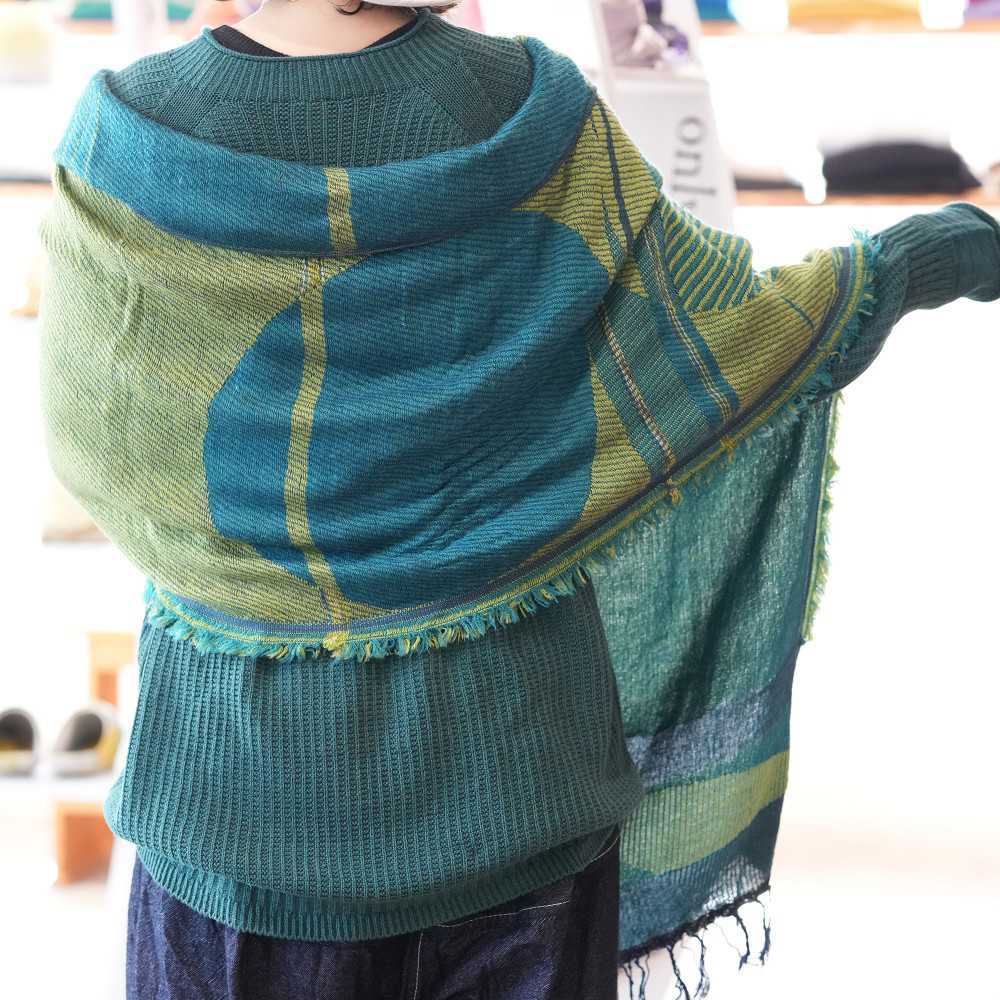
- Because of the yarn-dyeing process (irregular, hand-controlled dyeing called mura-zome), no two pieces are ever exactly alike — even within the same style and colorway.
- This is a core selling point, not a manufacturing inconsistency — it's intentional and central to the brand identity ("Only One" is literally how they name some product lines).
Multiple ways to wear
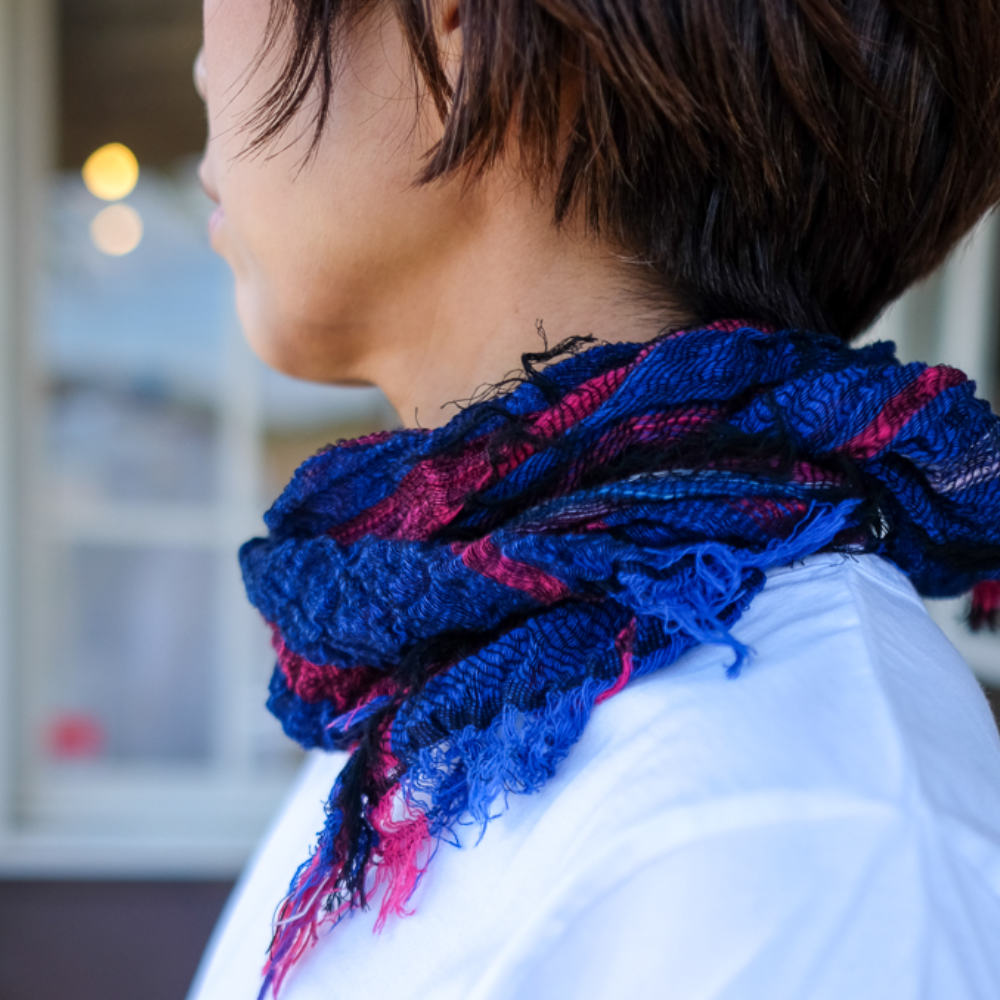
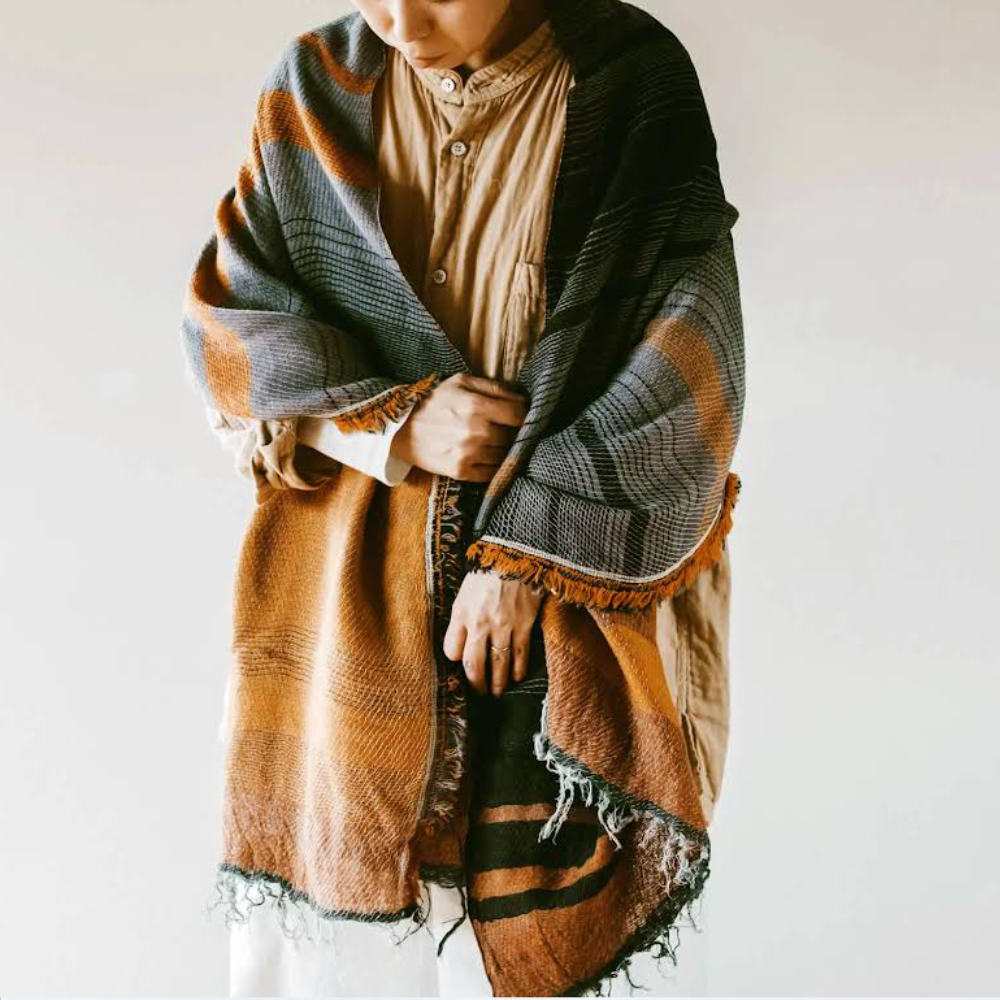
- Shawls in particular are designed to be large and lightweight enough to be worn many different ways — as a scarf, a wrap, a shawl, or styled as a light layer/cover-up.
- Designed to be gender-free, age-free, and nationality-free — one piece is meant to suit a wide range of customers, which is a good point for staff to make when someone's unsure "who this is for."
Sustainability angle (good for values-driven customers)
- Cotton has been grown organically in-house since 2014, aiming for full traceability of materials.
- The brand also runs an environmental regeneration project ("Daichi no Saisei" - soil/land regeneration) and staff wellness programs, reflecting a broader philosophy that good craftsmanship starts with a healthy team and healthy land.
Ihr Experte
Haben Sie Fragen zu diesem Produkt?