Maneki Cat : Protection
Maneki Cat : Protection
BOWS & ARROWS Store
17 Rue Notre Dame de Nazareth
Tue to Sat, from 12h30pm to 7h30pm
75003 Paris
Frankreich
Small in size, rich in meaning
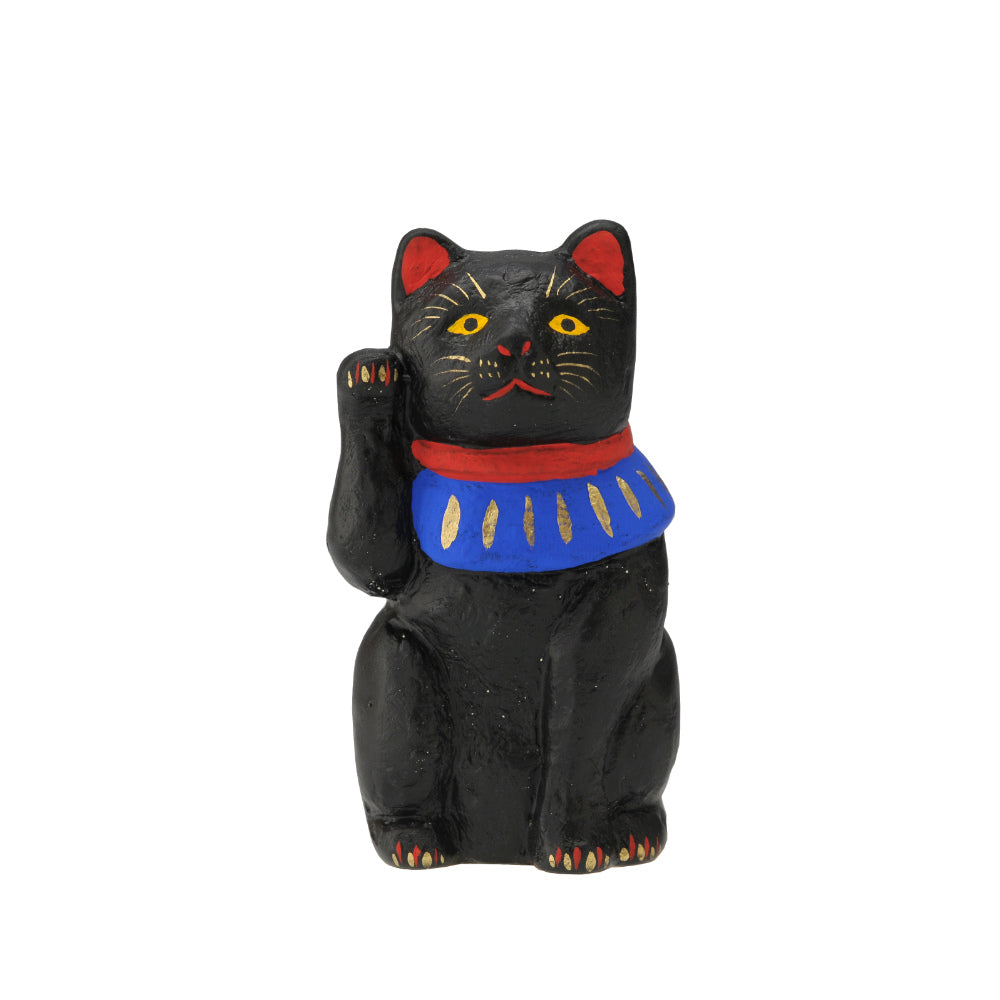
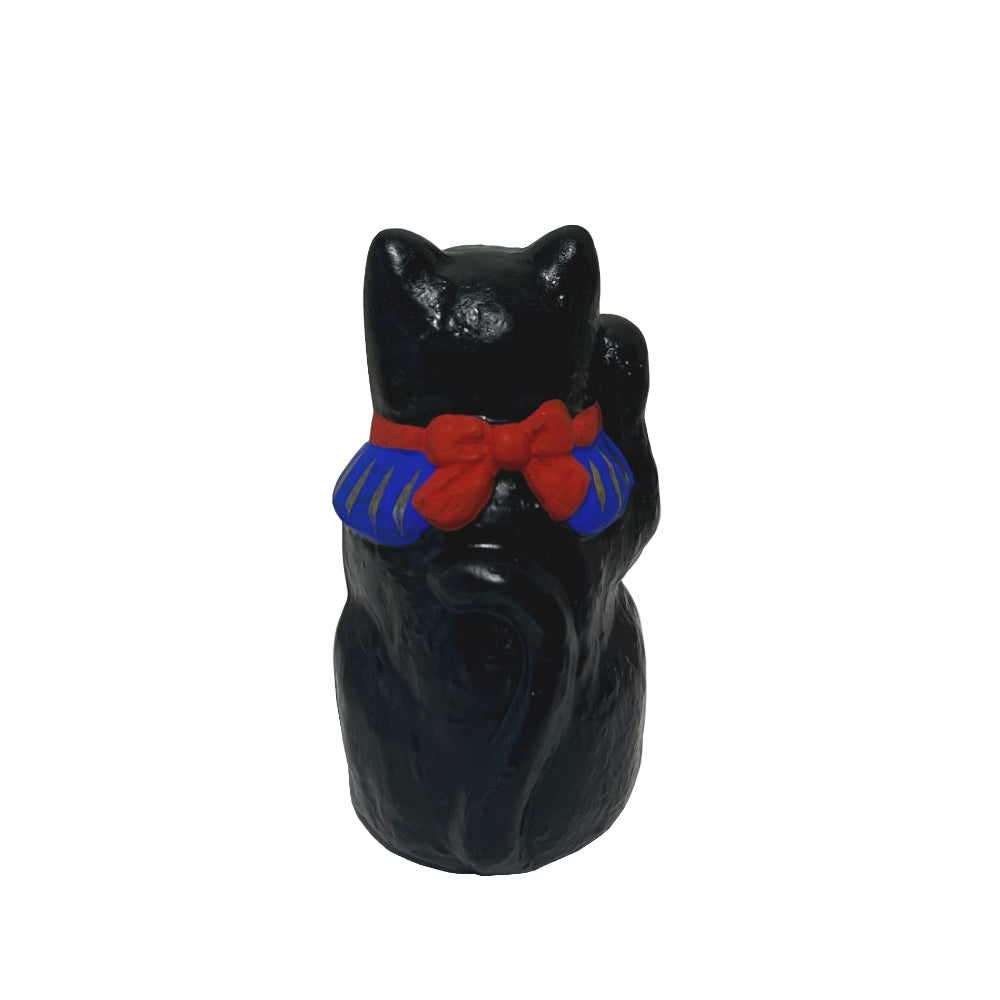
- A palm-sized black lucky cat, hand-cast and hand-painted in Japan
- Black cats are a traditional ward against evil in Japan — believed protective thanks to their sharp night vision
- Finished with a soft matte glaze, with black markings hand-painted onto a white ceramic base
- Made by a family ceramics workshop that has crafted Japan's fortune figures
- Hand-painted freehand after firing, so every cat's expression comes out a little different
"Raise a paw. Invite your fortune in."
Lucky cats are believed to have first appeared as a good-luck charm in the Edo period, adopted by shopkeepers and travelers to invite fortune. This one takes the colour black, which has long been considered protective in Japan — black cats were thought to see clearly in the dark and ward off evil as a result.
It's cast in a plaster mould, fired at around 1,030°C, then hand-painted afterward with no pre-firing glaze on the design — which is also why it shouldn't get wet. A raised right paw, like this one's, is said to invite wealth; a raised left paw is said to invite people.
This lucky cat comes from a small ceramics workshop in Seto, Japan and still family-run today, making zodiac dolls, Hina dolls, maneki-neko and shrine figures entirely by hand.
Seto has been one of Japan's great pottery towns since the Heian period, and for centuries was the only place in the country producing glazed ceramics — which is why "setomono" became the everyday Japanese word for pottery itself. From the late 1800s, Seto's potters turned that same skill toward ceramic dolls and figures, and this cat is still made the same way: cast in a plaster mould, fired, and hand-painted freehand with no sketch to follow.
Ceramic · H9.5 × W7.7 × D5.9 cm
Made in Seto, Japan